Connected CMMS

 Connected Buildings
 Connected Refrigeration


 Download ebook

 Read case study


 Watch now


 Retail
 Healthcare
 FM Services
 Commercial Portfolios
 Corporate Facilities
 Education
 Data-driven Portfolio Ops
 Facility Management Software
 360° Asset Lifecycle
 Continuous Sustainability

 Blogs
Blogs
 Help docs
 Knowledge Hub
 ROI Calculator
 Ebooks & Guides
 Webinars
 Videos
 Case studies


 About us
 Newsroom
 Careers
 Contact us
 Partners
 Events


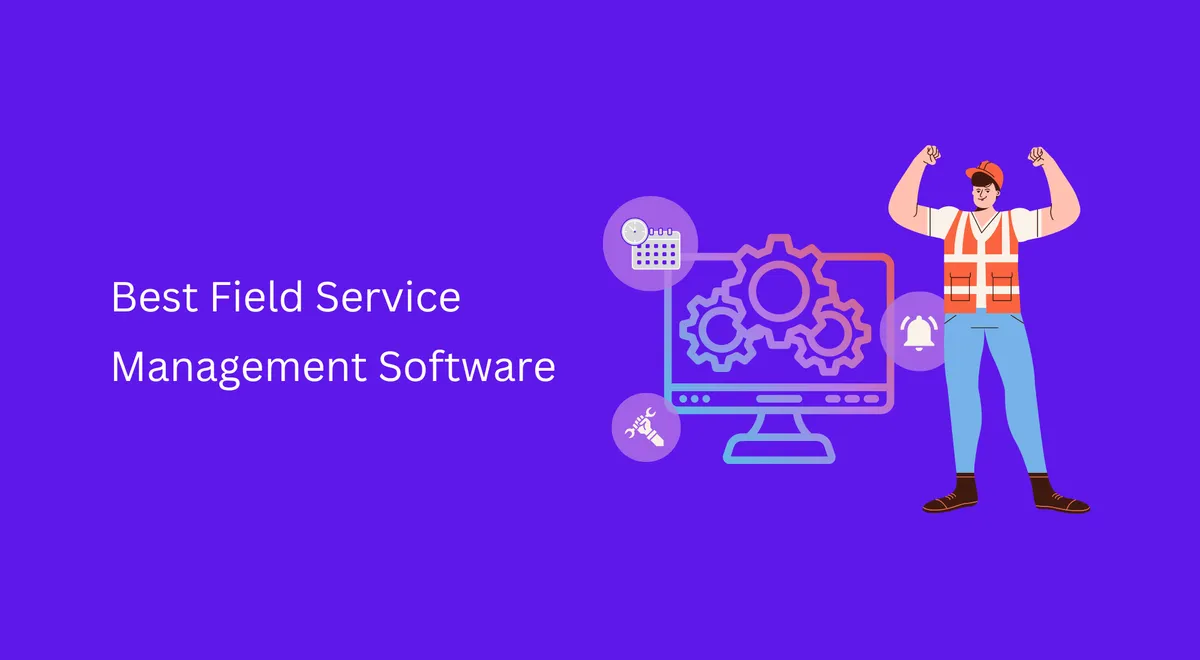

The best field service management software in 2026 are 1. Facilio, 2. IFS Cloud Field Service Management, 3. ServiceMax, 4. Microsoft Dynamics 365 Field Service, 5. ServiceNow Field Service Management, 6. Salesforce Field Service, 7. Oracle Field Service, 8. Corrigo (JLL), 9. ServiceChannel, 10. Planon, 11. BuildOps, 12. Infraspeak, 13. MaintainX, 14. Jobber, and 15. Housecall Pro.
Which one fits you depends on whether you prioritize connected multi-site operations, enterprise asset depth, or fast mobile adoption for frontline teams. If you run maintenance across a portfolio of commercial buildings rather than one-off residential jobs, that distinction decides everything.
Top 15 field service management software for 2026
- Facilio: A cloud-native field service management software built on a Connected CMMS, unifying dispatch, work orders, vendors, and IoT building data across a multi-site portfolio.
- IFS Cloud Field Service Management: Enterprise-grade, asset-intensive FSM with continuous AI scheduling and deep ERP/EAM integration for utilities, manufacturing, and large real estate.
- ServiceMax (PTC): Asset-centric FSM for equipment-heavy operations, with service contract automation, warranty tracking, and reliable offline mobile for engineers.
- Microsoft Dynamics 365 Field Service: FSM for Microsoft-stack organizations, with IoT remote diagnostics, Power Platform extensibility, and Teams/Power BI integration.
- ServiceNow Field Service Management: Dispatcher workspace and predictive intelligence for enterprises already running ServiceNow for IT and workplace services.
- Salesforce Field Service: CRM-connected FSM with Agentforce AI dispatch, contractor portals, and low-code customization for organizations standardized on Salesforce.
- Oracle Field Service: Enterprise FSM with a self-learning predictive scheduling engine and time-slot forecasting for high-volume, mobile-heavy workforces, tied to Oracle Cloud ERP and SCM.
- Corrigo (JLL): Work-order and vendor management with SLA enforcement and contractor compliance, strongest inside JLL-managed commercial real estate.
- ServiceChannel: Vendor-network and contractor-sourcing platform with invoice auditing, built for multi-site retail and restaurant facilities.
- Planon: Broad IWMS combining space, real estate, and maintenance with IoT and smart-building tracking for compliance-heavy portfolios.
- BuildOps: Commercial multi-trade FSM with deep asset hierarchies and accounting sync, aimed at mechanical and specialty service contractors.
- Infraspeak: FM-focused platform pairing field service visibility with maintenance management and a collaborative vendor network.
- MaintainX: Mobile-first maintenance and work-order app with barcode scanning and digital checklists for fast frontline adoption.
- Jobber: Simple scheduling, quoting, and invoicing for small home-service businesses running local trades work.
- Housecall Pro: Easy scheduling, payments, and customer messaging for residential home-service professionals.
Field service management software coordinates the people, work orders, and assets involved in servicing equipment across locations, from request intake and dispatch to on-site execution and reporting.
For facility management teams, the job is bigger than scheduling a technician: it means tracking assets by building, enforcing service-level agreements across a portfolio, and keeping third-party vendors accountable. That is why a general dispatch app and a facilities-grade platform score very differently below.
A ranked list tells you who the main players are, but not which one holds up across a hundred-building portfolio with its own vendors, SLAs, and building systems. The rest of this guide covers what field service management software actually is, how these platforms compare, and how to choose by tier and by the way your operation is structured.
What is field service management software?
Field service management (FSM) software helps organizations plan, dispatch, track, and report on service work performed by technicians in the field. It provides work order scheduling and dispatching, mobile work execution, asset and service history, parts and inventory, contract and SLA management, and reporting. For the recurring, calendar-driven side of the same work, see service scheduling software.
For facility management, FSM overlaps heavily with a CMMS software (Computerized Maintenance Management System). The difference is scope.
A standalone FSM tool is built to move a technician from job to job, whereas a facilities-grade platform ties that field work to asset hierarchies, property maintenance software workflows, vendor compliance, and portfolio reporting. Here is how the confusable categories differ:
| Category | What it does | Best fit |
|---|---|---|
| FSM | Dispatch, scheduling, mobile job execution | Service teams sending technicians to jobs |
| CMMS | Asset records, work orders, preventive maintenance | In-house maintenance and O&M teams |
| CaFM | Space, occupancy, and building services management | Workplace and facilities administration |
| IWMS | Real estate, space, maintenance, and lease in one suite | Enterprise portfolios needing space plus assets |
The CaFM label deserves a note: CAFM software (Computer-Aided Facility Management) leans toward space and building services, and the term is more common in UK and Middle East markets.
If you want the deeper breakdown, see what is field service management, our guide to the best CMMS software, and the roundup of best maintenance management software.
Facility teams increasingly want one platform that does the FSM job without losing the CMMS backbone, which is where the comparison below gets interesting.
Comparing the top field service management platforms for 2026
Pricing is listed as of September 2026 from vendor sites and third-party listings. Confirm current tiers before purchasing. Grouping follows the discrete categories that matter to facilities buyers: legacy enterprise EAM/IWMS, ERP-suite platforms, multi-site FM specialists, mobile-first CMMS, and the connected model.
| Platform | Tier | Best for | Standout strength | Honest limitation | Pricing model |
|---|---|---|---|---|---|
| Facilio | Connected CMMS (enterprise + mid-market) | Multi-site facility portfolios | Unifies FSM, CMMS, vendors, and IoT with no-code config | Not built for residential one-off trades work | Quote-based |
| IFS Cloud FSM | Enterprise | Asset-intensive enterprises | Continuous AI scheduling, deep ERP/EAM depth | Heavy, specialist-led implementation | Quote-based |
| ServiceMax | Enterprise | Equipment-heavy service orgs | Asset lifecycle and offline mobile reliability | Complexity and cost for mid-market FM | Quote-based |
| MS Dynamics 365 FS | Enterprise | Microsoft-stack teams | IoT diagnostics, Power Platform, Teams/Power BI | Needs customization to fit FM workflows | From ~$105/user/mo |
| ServiceNow FSM | Enterprise | Existing ServiceNow orgs | Workflow depth, predictive intelligence | ITSM-shaped reporting, high TCO | Quote-based |
| Salesforce Field Service | Enterprise | Salesforce CRM orgs | Agentforce AI dispatch, contractor and customer portals | Not FM-native, ecosystem lock-in | From ~$165/user/mo |
| Oracle Field Service | Enterprise | High-volume mobile workforces | Self-learning predictive routing and capacity | Oracle-centric, scheduling-heavy, lighter FM depth | Quote-based |
| Corrigo (JLL) | Mid-market | JLL-managed real estate | Work order and vendor compliance | Best inside the JLL ecosystem | Quote-based |
| ServiceChannel | Mid-market | Retail and restaurant chains | Vendor sourcing and invoice auditing | Retail-shaped, lighter analytics | Quote-based |
| Planon | Mid-market to enterprise | Compliance-heavy portfolios | Space, lease, and maintenance in one IWMS | Long implementation, high TCO | Quote-based |
| BuildOps | Mid-market | Mechanical service contractors | Asset hierarchies and accounting sync | Contractor-shaped, not owner-operator | Quote-based |
| Infraspeak | Mid-market | FM teams with vendor networks | FSM plus maintenance in one workspace | Smaller enterprise footprint | Quote-based |
| MaintainX | SMB | Frontline adoption speed | Fast mobile onboarding, checklists | Limited enterprise config and portals | Free plan, paid from ~$16/user/mo |
| Jobber | SMB | Small home-service businesses | Simple scheduling, quoting, invoicing | Not built for multi-site facilities | From ~$29/mo |
| Housecall Pro | SMB | Residential home-service pros | Easy scheduling, payments, customer texts | Residential focus, light on FM | From ~$59/mo |
How we evaluated these field service management tools
We ranked these platforms the way a facilities buyer actually shortlists them, not by counting features. Each tool was assessed against six criteria that decide fit for multi-site operations:
- Multi-site and asset hierarchy: Whether the system anchors assets to specific buildings and floors, not just customers.
- Preventive and reactive coverage: Both scheduled maintenance and on-demand dispatch tied to service contracts.
- Vendor and SLA management: Contractor compliance, insurance verification, and automated SLA enforcement per site.
- Offline-first mobile execution: Whether technicians can complete work orders in low-signal environments and sync later.
- Integration and configuration: Open BMS, ERP, and finance integration, and how much no-code control the team keeps.
- Proof and reviews: Cross-referenced against G2, Gartner Peer Insights, and verified customer outcomes.
Tools that score across all six rank highest for multi-site facility operations, while those that lead in a single lane, such as frontline mobile speed or enterprise asset depth, are called out for that specific strength in the reviews below. To keep the picture practical, the reviews are grouped into the three tiers buyers actually shop in: enterprise, mid-market, and small business.
Enterprise field service management software
Enterprise field service management software suits organizations running 200 or more technicians and a mix of internal and contractor workforces across many sites and corporate facilities, where deep ERP and CRM connectors, intelligent dispatching, asset lifecycle tracking, and multi-region governance matter more than a low sticker price.
Facilio, IFS, ServiceMax, Microsoft Dynamics 365, ServiceNow, Salesforce, and Oracle lead this tier, and SAP Field Service Management is a common shortlist entry for SAP-first enterprises. Within the tier, the best fit varies depending on which ERP or CRM you already run, and each platform is ideal for a slightly different operating model.
1. Facilio
Best for: Facility management companies and owner-operators running maintenance across a multi-site commercial portfolio.
Facilio is a cloud-native, IoT-led platform that delivers field service management as part of a Connected CMMS rather than a standalone dispatch tool.
It connects the people (technicians, vendors, occupants, and leadership), the processes (work order and dispatch workflows), and the systems (BMS, ERP, and finance) that most facility teams run in silos. The pitch is direct: connect and unify your existing systems instead of ripping them out.
In practice, one facility team runs very different work through the same platform. A tenant reports a broken air conditioner through the facility helpdesk.
Facilio captures the request, assigns it to an HVAC technician by skill and site, schedules the visit, tracks it to completion on offline mobile, and closes the loop with a tenant feedback rating, all against that asset's service history.
The same request-to-feedback flow drives a recurring landscaping and lawn-care route, a soft-services task such as cleaning or a security round, and a preventive HVAC service, so hard services, soft services, and grounds work live in one system instead of three.
Key features:
- Smart dispatch and trip management: Assigns field work by skill, availability, and location, with a dispatch console, on-field tracking, and multiple service appointments per work order.
- End-to-end work order lifecycle: Auto-converts request emails and helpdesk tickets into work orders, then carries each job through assignment, scheduling, monitoring, sign-off, and feedback tied to preventive maintenance software and AMC schedules.
- Vendor and SLA management: Tracks vendor licenses and insurance, auto-deactivates non-compliant vendors, and reports real-time SLA adherence across sites.
- Tenant and occupant helpdesk: A branded self-service portal captures tenant and occupant requests across web, app, and email, with AI-assisted intake and triage that starts the SLA clock the moment a request lands.
- Offline-first mobile: A mobile CMMS app lets technicians complete checklists, log parts, and capture photos in basements and mechanical rooms without signal.
- IoT and portfolio reporting: Integrates BMS and smart meters for condition-based dispatch, with no-code dashboards spanning the whole portfolio.
Pricing: Quote-based, tailored to portfolio size and modules (as of September 2026).
Pros:
- No-code configuration lets facilities teams adapt workflows without IT or developer time, so deployments run in weeks rather than year-long cycles.
- One platform spans dispatch, work order software, vendors, parts inventory management software, and financials, which removes the double data entry that comes with bolt-on FSM tools.
- Stakeholder portals for vendors and occupants push visibility beyond the back office and into the people who raise and receive the work.
- Live BMS and IoT data turns dispatch from reactive to condition-based, so a fault can open a work order before a tenant calls.
Cons:
- It is purpose-built for facility and asset-heavy portfolios, so it is not the right pick for a residential trades crew that only wants a lightweight invoicing app.
- Teams that need single-site scheduling and nothing else will not use the platform's full depth.
Customer proof: King Kullen, a US multi-site grocery operator, reported full visibility across store assets and automated compliance after adopting Facilio. "With Facilio, we now have full visibility across store assets, and the real-time alerts help us stay on top of events to mitigate any potential compliance risks," said Stanley Mitchell, VP Engineering, Construction and Maintenance.
Across deployments documented in Facilio's case studies, the platform reports customer outcomes such as 40% enhanced operational visibility and 30% fewer reactive call volumes (as of 2026).
Verdict: The strongest fit when field service is one piece of a larger, multi-site O&M operation rather than the whole job.
2. IFS Cloud Field Service Management
Best for: Large, asset-intensive enterprises in utilities, manufacturing, and heavy real estate.
IFS is a Gartner-recognized enterprise FSM platform engineered for scale and asset depth. It is built for asset-intensive industries such as utilities, manufacturing, and heavy real estate, where service work revolves around complex, high-value equipment rather than one-off jobs.
Its continuous scheduling engine re-optimizes technician routes in real time based on skills, inventory, and SLA priority, and its ERP and EAM roots give it unusually deep contract logic.
Key features:
- Continuous AI scheduling: Re-optimizes dispatch in real time by technician skill, truck inventory, and SLA priority through its Planning and Scheduling Optimization (PSO) engine, reshuffling routes automatically when an emergency work order arrives.
- ERP and EAM integration: Connects deeply to enterprise resource and asset systems, carrying service-contract, warranty, and financial data into every job.
- Workforce forecasting: Projects labor demand and capacity so large field teams are staffed against forecast workload instead of guesswork.
- Asset-centric service history: Maintains a complete service and repair record against complex, mission-critical equipment for compliance and reliability.
- Offline mobile execution: Lets engineers complete work orders, capture readings, and log parts in remote or low-signal environments, then syncs when reconnected.
Pricing: Quote-based (as of September 2026).
Pros:
- Handles genuinely complex, high-volume, asset-intensive service operations with contract and warranty logic most FSM tools cannot match.
- Gartner-recognized scheduling depth and proven enterprise scale.
- One backbone for FSM, EAM, and ERP, so maintenance, spares, and finance stay in sync.
Cons:
- According to review themes on Gartner Peer Insights, implementation is heavy and specialist-led, which raises time-to-value.
- Cost and configuration complexity are high for a mid-market facility team, and the breadth can mean paying for capabilities a facilities operation never uses.
3. ServiceMax
Best for: Equipment-heavy and regulated service organizations managing mission-critical assets.
Now part of PTC, ServiceMax is an asset-centric platform built around the installed base, the full population of equipment a company services in the field. Its Asset 360 product runs natively on Salesforce, while the wider suite adds entitlement and warranty management, parts and depot logistics, and the Zinc app for real-time technician collaboration.
It is a common choice for medical-device, industrial, and other regulated operations where equipment uptime is the business. Its strength is depth around a single machine's history and contracts rather than breadth across a facility portfolio.
Key features:
- Installed base and Asset 360: Maintains a complete, hierarchical record of every serviced asset, its configuration, and its full service history.
- Entitlement and warranty management: Checks coverage and entitlements at dispatch so billing, warranty, and SLA terms stay accurate.
- Condition-based work orders: Uses IoT and PTC connectivity to trigger service before a monitored asset fails.
- Parts and depot logistics: Coordinates spare parts, returns, and depot repair alongside field jobs for asset lifecycle tracking.
- Zinc collaboration and offline mobile: Gives engineers real-time expert help plus a dependable offline app for low-signal industrial sites.
Pricing: Quote-based. Third-party listings cite entry tiers from ~$49/user/mo (as of September 2026).
Pros:
- Unmatched depth for tracking and servicing high-value equipment portfolios, with strong condition-based maintenance and warranty management.
- Deep Salesforce and ERP connectivity for asset-heavy operations.
Cons:
- G2 reviewers cite cost and configuration complexity relative to simpler tools.
- The asset-centric depth can be overkill for general multi-site facilities.
- Implementation typically needs specialist or partner support.
4. Microsoft Dynamics 365 Field Service
Best for: Organizations standardized on the Microsoft stack.
Dynamics 365 Field Service brings IoT-enabled remote diagnostics, AR-guided repairs, and Power Platform extensibility, with tight ties to Teams and Power BI. It is the natural pick for organizations already standardized on Microsoft 365 and Azure, where field service becomes one more workload inside a familiar stack.
Its ceiling is high, but reaching it for facilities work usually means partner-led configuration. For a facilities-specific view, see our Facilio vs Microsoft Dynamics 365 comparison.
Key features:
- IoT remote monitoring: Reads connected-asset data to enable predictive alerts, self-service scheduling, and AI-assisted dispatch.
- AR-guided remote assist and Copilot: Dynamics 365 Remote Assist lets an expert guide a technician through a repair over augmented reality, while Copilot drafts work-order summaries and next steps to cut return visits.
- Power Platform extensibility: Adds low-code apps, flows, and custom workflows on top of the field service core.
- Work order and portal management: Runs the full work-order lifecycle with customer portals and asset history in one place.
- Microsoft-native integration: Connects out of the box to Teams, Power BI, and the wider Microsoft 365 ecosystem.
Pricing: From ~$105/user/mo standard. Contractor tier ~$50/user/mo (as of September 2026, per vendor listing).
Pros:
- A natural fit if your organization already lives in Microsoft 365 and Azure, with strong IoT and remote-diagnostics capability for connected assets.
- Extensible through the wider Power Platform ecosystem.
- Copilot and Azure IoT bring genuine automation to work-order handling.
Cons:
- Fitting it to facilities workflows usually needs partner-led customization.
- Reporting depth depends on Power BI licensing and setup.
- Total cost climbs once add-on modules and connectors are included.
5. ServiceNow Field Service Management
Best for: Enterprises already running ServiceNow for IT or workplace services.
ServiceNow extends its workflow engine into field service with a dispatcher workspace, contractor management, and predictive intelligence.
It makes the most sense for large enterprises that already run ServiceNow for IT or workplace services and want field workflows to extend from the same platform. The trade-off is that its reporting and data model carry an IT-service lineage rather than an FM-native one.
Key features:
- Dispatcher workspace: Provides drag-and-drop scheduling, real-time technician status, and a full mobile agent for the field.
- Asset and cost management: Tracks assets, costs, and contractors on one platform tied to enterprise workflows.
- Now Assist AI and predictive intelligence: Uses generative Now Assist plus platform analytics to route work orders automatically, summarize jobs, and anticipate demand.
- Field service contractor management: Dispatches directly to outsourced providers while keeping compliance and cost on one record.
- Enterprise governance: Enforces approvals, SLAs, and audit trails at enterprise scale.
Pricing: Quote-based (as of September 2026).
Pros:
- Powerful when field workflows extend from existing IT and enterprise operations, with strong cross-department orchestration.
- Cloud-native scale for large, process-heavy organizations.
Cons:
- Reporting is shaped by an ITSM lineage rather than FM-native needs.
- Total cost of ownership is high and tied to the ServiceNow ecosystem.
- Configuration usually requires certified admins or partners.
6. Salesforce Field Service
Best for: Enterprises standardized on Salesforce CRM and Service Cloud.
Salesforce Field Service extends Service Cloud into the field, tying every work order to the same customer, case, and asset record the back office already uses. Its optimization engine handles skills-based, territory-aware dispatch, and its Agentforce AI layer adds automated scheduling and an appointment assistant.
External contractors get scoped access through Experience Cloud portals, and van and warehouse stock is tracked against each job. It is powerful and highly customizable, but it is not FM-native and lacks the space and lease depth of an IWMS, so facilities workflows need configuration.
Key features:
- Skills-based scheduling and optimization: Assigns work by skill, territory, and travel, with an optimization engine that rebooks around emergencies and SLA deadlines.
- Agentforce AI dispatch: Adds automated scheduling, an appointment assistant, and AI-guided next steps for dispatchers and technicians.
- Contractor and customer portals: Experience Cloud gives third-party contractors scoped access to assigned work, and customers self-service booking with live status.
- Van and warehouse inventory: Tracks parts across trucks and warehouses and reserves stock against each work order for accurate first-time-fix.
- Offline-first mobile: Runs work orders, checklists, signatures, and asset service history without connectivity, then syncs on reconnect.
Pricing: From ~$165/user/mo, scaling higher for advanced tiers (as of September 2026, per vendor listing).
Pros:
- Strong when field service must connect to customer records and case management, backed by a mature AI dispatch engine.
- Highly customizable through low-code Flow and the broad Salesforce and AppExchange ecosystem.
- Contractor portals and van inventory support mixed internal and subcontracted workforces.
Cons:
- It is not FM-native, so space, lease, and portfolio hierarchy need custom modeling.
- G2 reviewers cite configuration complexity and per-user licensing that raise total cost of ownership.
7. Oracle Field Service
Best for: High-volume, mobile-heavy enterprises that need predictive routing at massive scale.
Oracle Field Service (originally TOA Technologies) is built around a self-learning predictive engine that forecasts how long each job will take for each technician, then books appointments into time slots it can realistically hit.
For utilities, telecom, and other operations dispatching hundreds or thousands of technicians a day, that routing accuracy is the core draw. It is strongest for organizations already on Oracle Cloud ERP and Supply Chain, where work orders, parts, and billing move end to end.
Key features:
- Self-learning routing engine: Uses each technician's historical performance to predict job duration and travel, then sequences routes and time-slot bookings around real capacity.
- Predictive route optimization: Continuously re-optimizes dispatch against live conditions, so a full board reshuffles automatically when an emergency work order lands.
- Capacity and quota management: Controls how much work each region and crew can absorb, protecting SLAs during demand spikes.
- Live tracking and customer ETA: Gives dispatchers real-time crew location and customers a live technician ETA similar to ride-share tracking.
- Oracle ERP and SCM connectors: Ties field work to Oracle Cloud finance, inventory, and asset systems, with offline mobile access that syncs when a technician leaves a low-signal site.
Pricing: Quote-based (as of September 2026).
Pros:
- Best-in-class predictive scheduling and dynamic routing for very high job volumes.
- Strong capacity planning and real-time crew tracking at enterprise scale.
- Deep, native fit for organizations standardized on Oracle Cloud.
Cons:
- On Gartner Peer Insights, reviewers note the platform is complex to configure and tune, with a real learning curve.
- Its value concentrates in scheduling, so asset and facilities depth is lighter than a dedicated EAM or CMMS.
Mid-market field service management software
Mid-market field service management software fits growing FM teams and service providers that need deeper inventory, routing, and vendor logic than a starter app, but not a multi-year enterprise rollout. Corrigo, ServiceChannel, Planon, BuildOps, and Infraspeak sit here, alongside trade-focused options such as Service Fusion and Simpro.
8. Corrigo (JLL)
Best for: Commercial real estate operations managed within the JLL ecosystem.
Corrigo pairs automated work order routing with contractor compliance and SLA enforcement, backed by a large provider network. Owned by JLL, it is proven at scale across large managed commercial real estate portfolios, where vendor accountability is the central problem.
Its depth shines inside the JLL ecosystem, which is also its main constraint for operators outside it. We break this down further in our Corrigo review.
Key features:
- Automated work order routing: Creates, routes, and tracks work orders through their full lifecycle with minimal manual touch.
- Contractor compliance: Verifies vendor insurance and licenses and enforces SLAs so non-compliant vendors are flagged automatically.
- CorrigoPro vendor network: Connects a marketplace of contractors who accept work, submit updates, and invoice through a shared mobile app.
- Asset lifecycle tracking: Maintains warranty, cost, and repair history against each asset across the portfolio.
- CRE integrations: Connects to enterprise real estate systems used across large managed portfolios.
Pricing: Quote-based (as of September 2026).
Pros:
- Deep work-order and vendor management for large managed portfolios, with strong SLA enforcement and contractor accountability.
- Proven at scale inside JLL-managed real estate, with a mature provider network.
Cons:
- It is optimized for JLL-managed facilities, which narrows fit for others.
- Integration outside the JLL ecosystem can be costly.
- Configuration is largely predefined, which limits no-code flexibility.
9. ServiceChannel
Best for: Multi-site retail and restaurant facility teams relying on third-party vendor networks.
ServiceChannel centers on contractor sourcing, vendor compliance, and machine-learning invoice auditing across distributed sites. It is built for retail and restaurant estates that run mostly on third-party vendors rather than in-house technicians, so its center of gravity is vendor governance and spend control.
That focus makes it excellent for what it does and lighter on predictive analytics and enterprise configuration. See the full breakdown in our ServiceChannel review.
Key features:
- Fixxbook vendor sourcing: Finds, onboards, and verifies contractors with insurance and compliance checks built in.
- Machine-learning invoice auditing: Catches billing errors and overcharges before they are paid.
- Work-order lifecycle tracking: Centralizes every work order across hundreds of distributed sites in one view.
- Contractor benchmarking: Scores vendors on response, cost, and quality so you can rebalance the network.
- Spend and service analytics: Rolls up portfolio-wide spend and service performance for procurement and operations.
Pricing: Quote-based (as of September 2026).
Pros:
- Strong vendor governance for retail and restaurant multi-site operations.
- Automated invoice auditing reduces overbilling and manual review.
- A deep contractor network suits distributed, third-party-heavy estates.
Cons:
- The platform is retail-shaped and less suited to in-house maintenance.
- Predictive and smart-analytics depth is lighter than an IWMS suite.
10. Planon
Best for: Compliance-heavy enterprises needing space, lease, and maintenance in one IWMS.
Planon is a broad Integrated Workplace Management System that combines real estate, maintenance, sustainability, and field services. It is aimed at large, compliance-heavy portfolios that need space and lease management sitting in the same suite as maintenance and field work.
That breadth is its selling point and also the reason it carries a longer, costlier implementation than a focused FSM tool. More detail is in our Planon review.
Key features:
- Space and real estate management: Handles space, moves, and real estate with CAD and BIM integration across the portfolio.
- Maintenance and work orders: Runs preventive and reactive maintenance alongside field-service dispatch.
- Compliance and sustainability reporting: Produces audit-ready compliance, energy, and sustainability reporting.
- Smart-building tracking: Integrates IoT and building data for condition-based operations.
- Lease and portfolio administration: Keeps lease and portfolio records in the same IWMS suite.
Pricing: Quote-based (as of September 2026).
Pros:
- One suite for portfolios that need spatial management and maintenance together, which point tools cannot match.
- Mature portfolio and regulatory reporting built for large, compliance-heavy estates.
Cons:
- Deployment cycles are long and total cost of ownership runs high.
- No-code flexibility is limited compared with modern platforms.
- Upgrades to the monolithic suite can be slow.
11. BuildOps
Best for: Commercial mechanical, electrical, and multi-trade service contractors.
BuildOps is a cloud platform engineered around deep property and asset hierarchies for contractors operating at scale. It is purpose-built for commercial mechanical, electrical, and multi-trade service contractors, especially those above the $10M revenue mark.
That contractor focus makes its quoting and asset tooling strong, but it fits a service-business model rather than an in-house owner-operator.
Key features:
- Multi-layered asset hierarchies: Maps parent accounts down to unit-level assets across hundreds of locations.
- Commercial quoting and invoicing: Builds complex commercial quotes and custom dispatch flows tied to billing.
- Equipment nameplate scanning: Lets a technician scan a unit to pull its full repair history and active agreements in the field.
- Service agreement tracking: Manages preventive maintenance and recurring service contracts across sites.
- ERP and accounting sync: Connects to QuickBooks and Sage so field work flows into the books.
Pricing: Quote-based (as of September 2026).
Pros:
- Excellent asset history and commercial quoting for contractors, purpose-built for mechanical, electrical, and multi-trade work.
- Strong offline mobile execution for technicians in the field.
- Native accounting sync keeps field work and finance aligned.
Cons:
- It is built for the service-contractor business model, not in-house owner-operators.
- Users report occasional syncing and technical glitches.
12. Infraspeak
Best for: FM teams coordinating internal technicians and external vendors across sites.
Infraspeak pairs field service visibility with maintenance management and a collaborative network for vendors. It is a modern, mid-market platform aimed at FM teams that want field work, maintenance, and vendor collaboration in one place without a heavy IWMS rollout.
Its collaborative network and flexible interface are its strengths, while its enterprise footprint is smaller than the legacy incumbents.
Key features:
- Intelligent Maintenance Management Platform: Keeps field service and maintenance management in a single modular workspace.
- Infraspeak Network: A shared space where property managers, internal techs, and third-party vendors work the same ticket without seat-license friction.
- Gear AI: Surfaces anomaly detection and maintenance suggestions from operational data.
- Preventive maintenance and SLAs: Schedules recurring maintenance and tracks compliance and SLA obligations.
- 100+ integrations: Connects to SAP, BMS, helpdesk, and other systems out of the box.
Pricing: Quote-based (as of September 2026).
Pros:
- A modern platform that keeps FM, field work, and vendors in one place, with strong vendor collaboration.
- A flexible, user-friendly interface that is fast to deploy relative to legacy incumbents.
- Modular pricing lets teams add capability as they grow.
Cons:
- Its enterprise footprint is smaller than the legacy IWMS incumbents.
- Advanced reporting is lighter than enterprise EAM suites.
Small business (SMB) field service management software
Small business field service management software is built for local service providers that want fast setup, simple scheduling, and mobile invoicing. MaintainX, Jobber, and Housecall Pro are common picks.
A consensus among field service operators on Reddit notes that these lighter tools often struggle with hybrid models that mix product sales, in-house crews, and independent subcontractors, which is exactly where multi-site facility teams outgrow them.
13. MaintainX
Best for: Frontline maintenance teams that need fast mobile adoption.
MaintainX is a mobile-first work-order and maintenance app known for rapid rollout and high technician adoption. It is built for frontline teams that need to be productive in days, not months, which makes it a strong fit for maintenance-heavy operations that value simplicity.
That same simplicity is its ceiling: it lacks the configuration, portals, and integration depth that enterprise FM eventually needs. See our MaintainX review for the deep dive.
Key features:
- Mobile-first work orders: Creates, assigns, and completes work orders with digital checklists and photo evidence from a phone.
- Real-time team messaging: Puts technician communication and instant work assignment inside the same app.
- Barcode and QR scanning: Pulls asset and parts records by scanning on-site.
- Preventive maintenance: Schedules recurring maintenance from reusable procedure libraries.
- Inventory and purchase orders: Tracks basic parts inventory and purchase orders against work.
Pricing: Free plan. Paid tiers from ~$16/user/mo (as of September 2026, per vendor listing).
Pros:
- Fast to deploy, with high technician adoption in days and an intuitive mobile experience.
- A free tier lowers the barrier for smaller operations.
Cons:
- It lacks the drag-and-drop configuration and stakeholder portals enterprise FM needs.
- Analytics and reporting are basic compared with IWMS platforms.
- Deep ERP and BMS integration is limited.
14. Jobber
Best for: Small home-service businesses running local trades work.
Jobber is a popular platform for small home-service businesses in trades such as landscaping, plumbing, and cleaning. It focuses on the essentials a small crew needs: quoting, scheduling, invoicing, and customer communication in one tidy app. It is well built for what it targets, but it is a local-business tool rather than a multi-site facilities platform.
Key features:
- Scheduling and dispatch: Drag-and-drop calendars assign jobs to a small field team.
- Quoting and invoicing: Turns quotes into jobs and invoices with online payment.
- Client communication: Sends automated appointment reminders and on-the-way texts.
- Client hub: Gives customers a self-service portal to approve quotes and pay.
Pricing: From ~$29/mo, scaling by feature tier and users (as of September 2026, per vendor listing).
Pros:
- Simple, quick to adopt, and priced for small teams.
- Strong customer communication and payment flow.
Cons:
- It is not built for multi-site asset hierarchies or portfolio reporting.
- Vendor compliance and enterprise integration are out of scope.
15. Housecall Pro
Best for: Residential home-service professionals.
Housecall Pro is a mobile-first platform for residential home-service pros, with scheduling, payments, and marketing tools aimed at growing a local book of business. Like Jobber, it does its job well for the residential market, and like Jobber it is not designed for the multi-site, vendor-heavy reality of facility operations.
Key features:
- Scheduling and dispatch: Books and assigns residential jobs from web or mobile.
- Payments and invoicing: Handles card payments, invoicing, and consumer financing.
- Customer messaging: Automates reminders, follow-ups, and review requests.
- Marketing tools: Adds email campaigns and a booking widget to win repeat work.
Pricing: From ~$59/mo, scaling by plan and seats (as of September 2026, per vendor listing).
Pros:
- Easy to use with strong consumer-facing payment and communication tools.
- Fast setup for a small residential crew.
Cons:
- The residential focus leaves it light on facilities and asset management.
- It lacks multi-site hierarchy, vendor compliance, and enterprise reporting.
Best field service management software by use case
- Best for multi-site facility portfolios: Facilio, for connecting field work to a Connected CMMS across every building, a fit for both owner-operators and facility management services providers.
- Best for connecting field service to building systems and IoT: Facilio, when live BMS and sensor data should trigger and prioritize dispatch automatically.
- Best for no-code, in-house configuration: Facilio, for teams that want to adapt workflows without developers or long IT projects.
- Best for tenant and occupant experience: Facilio, for a branded request portal with AI-assisted intake that keeps occupants informed and SLA status visible per request.
- Best for vendor and subcontractor management: Facilio and ServiceChannel, for automated insurance and license checks that stop non-compliant vendors from being assigned new work.
- Best for enterprise asset depth: IFS and ServiceMax, for asset-intensive, contract-heavy operations.
- Best for existing ERP ecosystems: Microsoft Dynamics 365, ServiceNow, Salesforce, and Oracle, when you standardize on that vendor.
- Best for fast frontline rollout: MaintainX, for mobile-first teams that need adoption in days.
Field service management software by industry
Different verticals demand different capabilities, so the right shortlist shifts by sector. Plumbing-led operations can narrow the field with plumbing dispatch software.
- Commercial real estate and offices: Portfolio hierarchy, tenant request intake, and vendor SLA enforcement matter most. See how this maps to commercial portfolios and read our take on enterprise facility management software.
- Retail and multi-location: Refrigeration monitoring, compliance, and vendor management across hundreds of stores. Facilio serves this through retail facility management software and connected refrigeration.
- Healthcare: Strict compliance, near-zero asset downtime, and biomedical plus facility asset separation define the category. Specialists like Brightly TheWorxHub, MRI Evolution, and Accruent lead here. For a healthcare-specific breakdown see our guide to healthcare maintenance management software.
- Data centers and mission-critical: Reliability, security clearance for technicians, and remote monitoring dominate. Explore data center facility management software.
- Education and campuses: Districts and universities juggle classrooms, dorms, athletics, and grounds across many buildings, so request intake from staff and students plus preventive maintenance scheduling matter most. See education facility management and our guide to campus facility management.
- Manufacturing and industrial: Plant and production-asset uptime is the priority, so asset-intensive platforms such as IFS, ServiceMax, and SAP lead, while a Connected CMMS covers the facility and building side of the site.
- Government and public sector: Public real estate, schools, and municipal assets need audit-ready compliance and tight budgets. Brightly is strong in this space, and connected platforms suit agencies unifying maintenance across scattered public buildings.
What features to evaluate in field service management software
When you shortlist platforms for a facility portfolio, weigh these against your operation rather than a generic feature checklist. Good field service scheduling is only the starting point. The criteria below separate a facilities platform from a job app:
- True asset hierarchy: Can the system anchor a component (a compressor) inside a machine (an HVAC unit) on a specific floor of a specific building? This is the line between a facilities platform and a job app.
- Preventive plus reactive coverage: Look for both scheduled reactive maintenance software and preventive work tied to service contracts, not just ad hoc dispatch.
- Intelligent dispatching and skills-based assignment: Automated scheduling that matches a job to technician skill, certification, location, and parts availability, which helps reduce truck rolls and is critical for healthcare and data center compliance.
- Vendor and SLA automation: Automated compliance tracking, insurance and license verification, and SLA response logic per site, since multi-site work is mostly third-party.
- Offline-first mobile: Field teams work in dead zones, so mobile must function without signal and sync later.
- Inventory and parts logistics: Warehouse-to-van stock tracking so technicians can request, transfer, and bill parts from the field app.
- Portfolio reporting: No-code dashboards that roll up open work, response time, MTTR, and cost per property across the portfolio.
- ERP and CRM connectors: Open integration with your BMS, ERP, and finance systems so you connect rather than replace.
How to choose the right field service management software
Answer these questions to compare your options, and the shortlist narrows fast:
- Do you manage your own facilities, or provide field service to clients? Owner-operators and in-house FM teams lean toward a connected platform. Pure service contractors lean toward BuildOps or ServiceMax.
- How many sites, and how dense are the assets? A handful of sites tolerates a mobile CMMS. Hundreds of buildings need portfolio hierarchy and disciplined commercial real estate work order management.
- Do you already run a major ERP or CRM? If so, the native suite (Dynamics, ServiceNow, Salesforce, Oracle) earns a look, weighed against how much FM depth it lacks.
- Is most of your work done by third parties? Vendor-heavy estates need compliance, insurance verification, and a subcontractor portal more than a slick internal scheduler.
- What has to integrate? List your BMS, ERP, and finance systems up front, so you buy a platform that connects rather than forces a rip-and-replace.
Then avoid the common trap: buying a residential-grade FSM tool and bolting on a separate CMMS, a separate vendor portal, and a separate reporting layer. Each bolt-on adds double data entry and a new silo, which drives more truck rolls and higher cost, and buries the data you need for a clear repair or replace decision on aging assets. Route-based operators such as pest control can compare pest control scheduling software before committing.
Why facility management teams are moving to a connected model
Legacy field service tools work fine for basic scheduling but cannot handle the reality of multi-site operations: assets scattered across buildings, vendors who need accountability, and leadership who want one portfolio view. In-house teams routing their own technicians can also look at maintenance dispatch software.
Treated as pure enterprise asset management software, these tools track equipment but miss the live service layer.
According to the U.S. Department of Energy's O&M Best Practices research from Pacific Northwest National Laboratory, a well-run preventive maintenance program can save 12% to 18% over a reactive one, savings that fragmented tools leak away.
That is the shift Facilio is built around.
Rather than adding another point solution, its facility management software unifies service management, vendor management, procurement automation software, and financials so leadership can reduce expense leaks, improve compliance, and plan budgets from one source of truth.
Real-time condition data from connected buildings enables condition-based dispatch rather than reactive callouts, and no-code configuration means the FM team owns changes instead of waiting on IT.
The demand signal is clear. The global field service management market is on a steep growth curve this decade, according to Grand View Research, as asset-intensive operators move off spreadsheets and toward integrated building maintenance software.
Facility teams that consolidate early turn maintenance from a cost center into a source of savings and service quality.
Why decision makers are choosing Facilio as their field service management software
Facility and operations decision makers keep landing on Facilio for a reason that shows up after the demo, not during it: it removes the silos that make multi-site field service expensive.
Most teams run dispatch in one tool, maintenance in another, vendor compliance in a spreadsheet, and reporting in a fourth place. Facilio collapses those into one Connected CMMS, so a work order, the asset it touches, the vendor who services it, and the cost it carries all live in one record.
That consolidation is what decision makers buy. It gives a facilities director real-time visibility into technician location and SLA status, gives finance a clean view of cost per property, and gives executives a portfolio dashboard without waiting on IT to build a report.
Because configuration is no-code, the operations team owns changes directly, which is why deployments run in weeks rather than the year-long cycles legacy platforms are known for.
The proof is in how customers describe the shift. Multi-site US operators report full asset visibility and automated compliance after moving off disconnected tools, and across deployments Facilio reports outcomes such as 97% SLA adherence and 40% reduced asset downtime (as of 2026, per customer case studies).
For decision makers weighing a purchase, the draw is not a single feature but the operating model: field service stops being a standalone cost and becomes one connected, measurable part of how the portfolio runs.
The bottom line
If your field service is really about servicing equipment across a portfolio of commercial buildings, choose a platform that treats field work as one connected part of facility operations, not a standalone dispatch app. Facilio leads that connected category. Teams planning recurring plumbing visits rather than emergencies should also weigh plumbing scheduling software.
IFS and ServiceMax win on enterprise asset depth. Dynamics, ServiceNow, Salesforce, and Oracle fit their own ERP and CRM ecosystems. Corrigo, ServiceChannel, Planon, BuildOps, and Infraspeak each own a mid-market lane. And MaintainX, Jobber, and Housecall Pro serve smaller and residential teams.
Want to see what connected field service looks like across your portfolio? Request a Facilio demo and we will walk through your multi-site workflows in 30 minutes.
Frequently asked questions
1. What is the best field service management software for facility management companies?
Facilio leads for facility management companies running multi-site portfolios, because it delivers field service inside a Connected CMMS. IFS and ServiceMax suit asset-heavy enterprises, while ServiceChannel and Corrigo fit vendor-heavy retail operations.
2. What is the difference between field service management and CMMS software?
FSM software focuses on dispatching and mobile job execution for field technicians. A CMMS focuses on assets, work orders, and preventive maintenance. Facility teams increasingly want both in one platform rather than two disconnected tools.
3. How much does field service management software cost?
Pricing ranges from free or low mobile tiers (MaintainX from ~$16/user/mo, Jobber from ~$29/mo) to per-user ERP suites (Dynamics from ~$105/user/mo, Salesforce from ~$165/user/mo) and quote-based enterprise platforms. Confirm current pricing with each vendor as of 2026.
4. Which field service management software is best for multi-site operations?
For multi-site facilities, prioritize true asset hierarchy, vendor and SLA automation, offline mobile, and portfolio reporting. Facilio, IFS, ServiceChannel, and Corrigo are common shortlist picks for hundreds of locations.
5. Does field service management software work offline for technicians?
Yes. Leading platforms including Facilio, ServiceMax, and MaintainX offer offline-first mobile apps so technicians can complete checklists, log parts, and capture photos without signal, then sync automatically once reconnected.
6. Can field service management software integrate with our BMS and ERP?
Enterprise platforms integrate with BMS, ERP, and finance systems. Facilio is built around no-code integration so you connect and unify existing systems rather than replacing them, which shortens deployment.
7. Which field service management software has a tenant request portal and vendor compliance?
Facilio pairs a branded tenant and occupant request portal with vendor compliance that auto-verifies insurance and licenses and deactivates non-compliant vendors. ServiceChannel and Corrigo also offer strong contractor compliance for vendor-heavy portfolios.
8. What is the difference between a standalone FSM app and a Connected CMMS?
A standalone FSM app schedules and dispatches technicians to jobs. A Connected CMMS like Facilio ties that field work to assets by building, preventive maintenance, vendor SLAs, BMS and IoT data, and portfolio cost reporting, so field service becomes one part of facility operations.
9. What is the best field service management software for enterprises?
For enterprises running 200+ technicians with ERP or CRM integration, Salesforce Field Service, Microsoft Dynamics 365, Oracle Field Service, ServiceNow, IFS, and ServiceMax lead. Facilio is the strongest enterprise fit for multi-site commercial-property and facilities portfolios.
10. Which field service management software is best for small businesses?
For small home-service businesses, Jobber and Housecall Pro offer easy scheduling, invoicing, and customer messaging, while MaintainX suits maintenance-heavy SMB teams. These are lighter than the enterprise and mid-market platforms multi-site facility operators need.
About the Author

More from Facilio