







 Service intake















Archibus is one of the longest-running names in facilities software, and the reviews reflect it: a broad, deeply customizable platform that large organizations build their operations around, paired with a recurring set of complaints about cost, complexity, and a dated feel.
Across the major review platforms, Archibus sits between 4.0 and 4.3 out of 5, with the weak spot almost always the same: value for money. The question most buyers are really asking is not whether Archibus works. It is whether it is the right class of tool for their team, or more system than they need.
This page summarizes what users report across Capterra, G2, TrustRadius, and Software Advice, where Archibus earns its reputation, where buyers get frustrated, how pricing works, and who it fits by organization size.
Is Archibus a CMMS or an IWMS?
This is the first thing to settle, because it decides whether Archibus belongs on your shortlist at all.
Archibus is an Integrated Workplace Management System, or IWMS. That means its center of gravity is the real estate and the workplace: space planning, moves, lease and portfolio data, capital projects, and sustainability reporting, with maintenance management as one module among many. Reviewers and the directories consistently describe it as a broad suite for managing buildings, space, and assets together.
A CMMS, by contrast, leads with maintenance operations: work orders, preventive maintenance, assets, parts, and field teams. The overlap is real, but the emphasis is different.
So the fork is simple:
- If your primary job is space, moves, leases, and real-estate planning across a large property portfolio, Archibus is on home turf.
- If your primary job is maintenance and field operations, a dedicated CMMS, or a modern platform built around maintenance, is usually a closer fit and a lighter lift.
If you are weighing the wider field, the best IWMS software roundup shows how Archibus sits among its direct peers.
For a maintenance-led shortlist instead, the best CMMS software guide is the better place to start.
Inside Archibus: modules, apps, and deployment
Archibus spans the full workplace and real-estate lifecycle in one system. It is an integrated workplace management system (IWMS) and computer-aided facilities management (CAFM) platform, used by large enterprises, universities, healthcare systems, airports, and government agencies to manage real estate, space, assets, and maintenance together.
It is now an Eptura product. Eptura was formed in 2022 from the merger of iOffice and SpaceIQ, and Archibus is listed everywhere as "Archibus by Eptura," sold through Eptura's partner network rather than bought directly. That ownership change matters to current buyers, and it comes up in the limitations below.
The platform is organized into modules that organizations license as needed:
- Space and occupancy management, move management, and hoteling or desk reservations
- Real estate and lease administration, and capital project management
- Asset lifecycle management and preventive and reactive maintenance
- Environmental and energy management for sustainability reporting
- CAD and BIM integration with Autodesk AutoCAD and Revit, plus GIS, so floor plans and spatial data connect directly to the records
Two named apps sit on top of the core. Archibus OnSite is the mobile app for technicians handling reactive and preventive maintenance, with work-request management, floor-plan context, and a cached offline mode. Archibus Workplace is the employee-facing app for room and desk booking and service requests.
Archibus runs as a cloud (SaaS) subscription or on-premises, and it carries enterprise security credentials, including FedRAMP Authorization for its government cloud, achieved in May 2025 and sponsored by the U.S. Department of Veterans Affairs. That federal standing is a genuine differentiator for public-sector buyers.
Archibus ratings across review sites
Archibus reviews well on the headline numbers, with a clear and consistent dip on value. The ratings below are current as of October 2026. Re-verify before relying on them, because the review bases are small and the scores move.
| Platform | Rating | Reviews | What users highlight |
|---|---|---|---|
| Capterra | 4.3 / 5 | ~30 | Breadth of functionality; value the lowest sub-score (3.3) |
| Software Advice | 4.3 / 5 | ~30 | Ease of use ~4.0; value ~3.25 |
| G2 | 4.0 / 5 | ~19 | Enterprise fit; integrations |
| TrustRadius | 6.6 / 10 | ~9 | Customizability; better for large campuses than single buildings |
| Software Finder | 4.3 / 5 | ~25 | Overall satisfaction |
Two things are worth reading into these numbers rather than past them.
First, the star platforms cluster around 4.0 to 4.3, while TrustRadius sits lower at 6.6 out of 10. The gap is less a contradiction than a reflection of small samples and tougher scoring on value and ease of use, which are exactly the areas buyers should probe.
Second, the review bases are modest for a platform this established, so treat every score as directional. On PeerSpot, Archibus held a workplace-management mindset of about 22.8 percent as of August 2025, down year on year, which fits the picture of a widely deployed incumbent facing newer competition.
Archibus pros
Verbatim from verified reviewers on Capterra and TrustRadius.
Breadth of functionality in one system
The most consistent praise is scope: Archibus manages space, moves, leases, assets, and maintenance from one database.
"The breadth of business processes it covers. We use it for space management, move management, maintenance, green building, and hoteling." Giacomo M., Senior Business Analyst, non-profit (Capterra)
The loyalty that breadth earns shows up too.
"Used Archibus for over 20 years now… couldn't imagine using any other software for IWMS." David D., Archibus System Administrator, insurance (Capterra)
Deep customizability
Experienced teams value being able to shape Archibus to their own processes.
"The comprehensive suite of features is the biggest reason for choosing this software. It has an immense number of features and is easy to customize." Marcel S., Archibus Technical Analyst, higher education (Capterra)
That flexibility carries a cost for less-technical teams, covered in the limitations below.
CAD, BIM, and GIS integration
Archibus connects floor plans and spatial data directly to the records, which space-led teams rate highly.
"Integration from AutoCAD is perfect." Ryan H., Strategic Space Planner, insurance (Capterra)
"The AutoCAD/Revit plugin is a major value add." Devin M., Manager of Facilities Drawings, hospital system (Capterra)
Enterprise integrations
Users report valuable links to the systems facilities data has to move between.
"The way it can integrate with HR systems such as WorkDay and other ticketing systems like ServiceNow have proven to be invaluable." David D., Archibus System Administrator, insurance (Capterra)
Reporting, modules, and scale
For large, complex organizations, the reporting and the pick-your-modules model come up again and again.
"Archibus has very powerful reporting solutions" with "expansive modules catered to every need of the real estate and facilities organization." Zig Wu, Senior Program Manager, Stanford Health Care (TrustRadius)
Its FedRAMP Authorization, confirmed in 2025, also makes it a credible option where U.S. federal security standards are a procurement requirement, a bar many facilities platforms do not clear.
Archibus cons
Ordered by how often and how sharply the concern comes up.
Value for money is the weak spot
Value is the lowest sub-score Archibus receives across platforms, around 3.3 out of 5 on Capterra and Software Advice, and the licensing model is why.
"Licensing is per user, making large deployments where many people merely need to view/report on data very expensive." Devin M., Manager of Facilities Drawings, hospital system (Capterra)
"Archibus is not the least expensive software." Shlomo M., CEO, facilities services (Capterra)
Customization adds real cost and effort
The flexibility praised above is also what drives up the total cost of ownership.
"All customization must be done via proprietary code editing on the back-end, making any minor customization complicated, time consuming, and/or expensive." Devin M. (Capterra)
"For it to do most functions more efficiently you have to customize it which adds to the expense of owning it." David D. (Capterra)
The interface feels dated and complex
A recurring theme is that the core interface is heavy and built for power users.
"Smart Client UI is dated and quirky." Will A., Director of Facilities Systems, hospital system (Capterra)
"It takes many steps to get to features within Webcentral, too complex, created for power users." Zig Wu, Stanford Health Care (TrustRadius)
Upgrades have grown harder
Long-tenure users report that updates have become more complicated over time.
"The upgrade process has gotten complicated." Gary C., Database Manager, aviation (Capterra)
"Upgrades can be very painful and expensive." Will A. (Capterra)
Mobile and the field experience
Reviewers flag the mobile experience, though Eptura is actively reworking the apps.
"Current mobile app has performance and usability issues… in the process of replacing this application." Marcel S., higher education (Capterra)
Test current performance on your own devices with Archibus OnSite during a trial rather than relying on older reviews.
Support since the Eptura transition
Some long-term customers describe a shift toward a more corporate, partner-reliant support model.
"Don't like it becoming so corporate and impersonal. I miss human interaction with ARCHIBUS Tech Support." Gary C., aviation (Capterra)
"The system just seems unconnected, ripe with problems and no one with resolutions." Kevin E., Business Solutions Analyst, education (Capterra)
Experiences depend heavily on the partner and plan, so confirm who handles your support in writing.
Who Archibus is best for
Great fit if you are a large campus or enterprise with real space, lease, and capital-planning needs, and the staff to run it. Think twice if you are small, single-site, or maintenance-led on a tight budget.
Large enterprises and multi-building campuses: this is where Archibus is strongest. Universities, government agencies, healthcare systems, and airports with large property portfolios, dedicated administrators, and real space, lease, and capital-planning needs get the most from the breadth and the CAD/BIM depth. The federal-security standing adds to the case in the public sector.
Mid-market organizations: the fit depends on resources more than size. Teams with in-house or partner expertise to configure and maintain Archibus can do well; teams without it tend to feel the cost and complexity more than the benefit, and should scope implementation carefully.
Small or single-building operations: this is where reviewers most often say to look elsewhere. The platform is powerful but heavy, the value scores are lowest here, and the customization overhead rarely pays back for a focused operation. One reviewer summary put it plainly: better suited to large multi-building configurations than to single buildings.
Maintenance-led teams of any size: if your core work is work orders, preventive maintenance, and field operations rather than space and real estate, a maintenance-first platform usually delivers faster with less overhead, a point the comparison below returns to.
How much does Archibus cost?
Archibus does not publish a price list, and that is the honest starting point. G2 shows no pricing, Capterra lists the starting price as "contact vendor," and Software Advice records it as available on request, with no free trial and no free version.
What the reviews and public records do make clear is how the pricing is structured:
- Quote only, sold through partners: every deal is a custom quote through Eptura's reseller network.
- Per module and per user: you license a core environment, then add the modules you need and user seats, with power users and occasional users priced differently.
- Two license types: a fixed-term subscription, cloud or on-premises, or a perpetual license with annual support and maintenance fees.
The figures that do surface put Archibus firmly in enterprise territory. A certified Eptura reseller listed Archibus on a UK government framework at £164,000 per instance, per year (as of May 2024), and third-party estimates for a small deployment run well into five figures once implementation is included. Set against the 3.3 value score, the takeaway is to get the full picture, modules, seats, implementation, and renewal uplift, in writing before you sign.
For a fuller breakdown of how the Eptura-owned pricing works, see the eptura pricing page.
For how facilities software is priced more generally, the cmms pricing guide walks through the models and what to budget.
Maintenance-led instead of space-led?
See how Facilio runs work orders, PPM and assets with AI agents built in.
How Archibus compares to Facilio
If the fork at the top of this page pointed you toward the maintenance and operations side, it is worth seeing what a platform built around that work looks like.
Facilio is the agentic platform for facilities management. Where Archibus leads with space and real estate and treats maintenance as one module, Facilio leads with the operations and maintenance of real estate, with a Connected CMMS as its core and an agent layer across the workflow.
The practical contrast, limited to where the two genuinely overlap:
| Dimension | Archibus | Facilio |
|---|---|---|
| Built around | Space, real estate, and the workplace, with maintenance as a module | Operations and maintenance of real estate, as the core |
| Mobile and field work | Archibus OnSite app; reviewers report a mobile-to-desktop disconnect | Mobile and offline-first by design, so field work continues when the connection drops |
| Time to value | Configuration and consulting effort; steep learning curve reported | Apps in days and agents in weeks, built and run by the vendor's team |
| Delivery model | Software plus a partner network | FM Ops Engineers who build it, run it, and stay |
| Deployment and security | Cloud or on-premises; FedRAMP Authorized government cloud | SaaS or behind your firewall; SOC 2, ISO 27001, GDPR |
Facilio's core covers the maintenance operations an FM team runs every day: work orders, asset lifecycle and preventive maintenance, mobile and offline-first field service with dispatch and SLA tracking, inspections and compliance, vendor and subcontractor management, and parts, inventory, and procurement, with no-code reports and dashboards on top.
Its Atom agent suite handles discrete jobs end to end, service intake, dispatch, vendor coordination, invoice processing, and compliance tracking, running on your existing CMMS or on Facilio's own. Deployment is LLM-agnostic, SaaS or behind your firewall, with SOC 2, ISO 27001, and GDPR coverage.
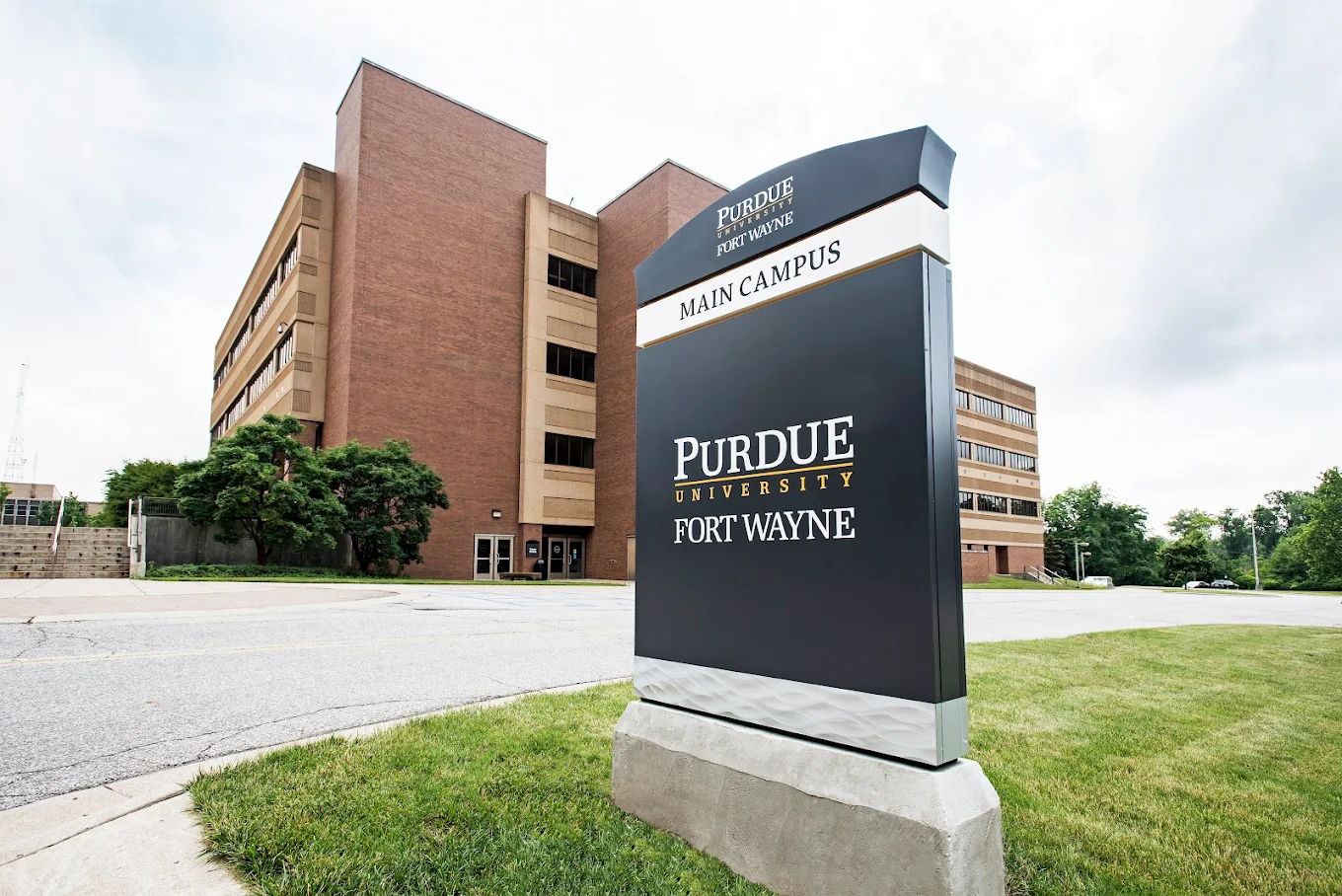
What that looks like in practice: Purdue University Fort Wayne replaced a 16-year-old legacy system with Facilio's Connected CMMS across its 55-building campus, moving asset management, planned and reactive maintenance, work orders, and an occupant portal onto one platform. It is the kind of large-campus operation Archibus is built for, run instead on a maintenance-first platform.
To be fair to the trade-off: Archibus remains the broader system for organizations whose work is genuinely space, lease, and capital-project led, and its CAD and BIM depth is beyond what a maintenance-first platform offers. The honest question is which job is your core job. Buyers weighing the wider field can also see the archibus alternatives roundup.
Is Archibus worth it? The bottom line
Archibus is a capable, proven IWMS, and the reviews back that up where it counts. For large enterprises and multi-building campuses with real space, lease, and capital-planning needs, and the resources to configure and maintain the system, it consolidates a lot into one platform and keeps customers for years. The federal-security standing and the CAD and BIM depth are genuine strengths that few alternatives match.
The caution is equally clear. Value for money is the weakest score across every platform, the interface and customization demand technical effort, and the fit falls off quickly for smaller or maintenance-led teams. If that is you, a platform built around operations and maintenance will usually get you further, faster, and for less.
Before you decide, pressure-test the cost and the mobile experience in a trial, and read Archibus against your actual core job using a structured evaluating facilities management software checklist.
If your core is maintenance and field operations, request a demo of Facilio and compare the two on the work your team does every day.
Frequently asked questions
What is Archibus used for?
Archibus is an IWMS used to manage real estate, space, assets, and maintenance in one system. Typical uses include space and move management, lease and capital-project administration, asset lifecycle and preventive maintenance, and sustainability reporting, most often at large campuses and enterprises.
Who owns Archibus?
Archibus is owned by Eptura, which was formed in 2022 from the merger of iOffice and SpaceIQ. It is now sold and supported as "Archibus by Eptura" through Eptura's partner network.
How is Archibus rated across review sites?
As of October 2026, Archibus sits around 4.0 to 4.3 out of 5 on Capterra, Software Advice, and G2, and 6.6 out of 10 on TrustRadius. Value for money is consistently its lowest sub-score, near 3.3 out of 5.
Is Archibus good for small facilities teams?
Usually not. Reviewers describe Archibus as a heavy enterprise platform whose cost and customization overhead rarely pay back for small or single-building operations. Smaller and maintenance-led teams tend to fit a dedicated CMMS better.
How much does Archibus cost?
Archibus is quote only, with no public price list, no free trial, and no free version. It is priced per module and per user, with fixed-term or perpetual license options, and it falls in enterprise territory once modules and implementation are included.
What are the main complaints about Archibus?
The most common concerns are value for money, the cost and effort of customization, a dated and complex interface, harder upgrades over time, mobile performance, and a more partner-reliant support model since the Eptura transition.
About the Author