Connected CMMS

 Connected Buildings
 Connected Refrigeration


 Download ebook

 Read case study


 Watch now


 Retail
 Healthcare
 FM Services
 Commercial Portfolios
 Corporate Facilities
 Education
 Data-driven Portfolio Ops
 Facility Management Software
 360° Asset Lifecycle
 Continuous Sustainability

 Blogs
Blogs
 Help docs
 Knowledge Hub
 ROI Calculator
 Ebooks & Guides
 Webinars
 Case studies


 About us
 Newsroom
 Careers
 Contact us
 Partners
 Events


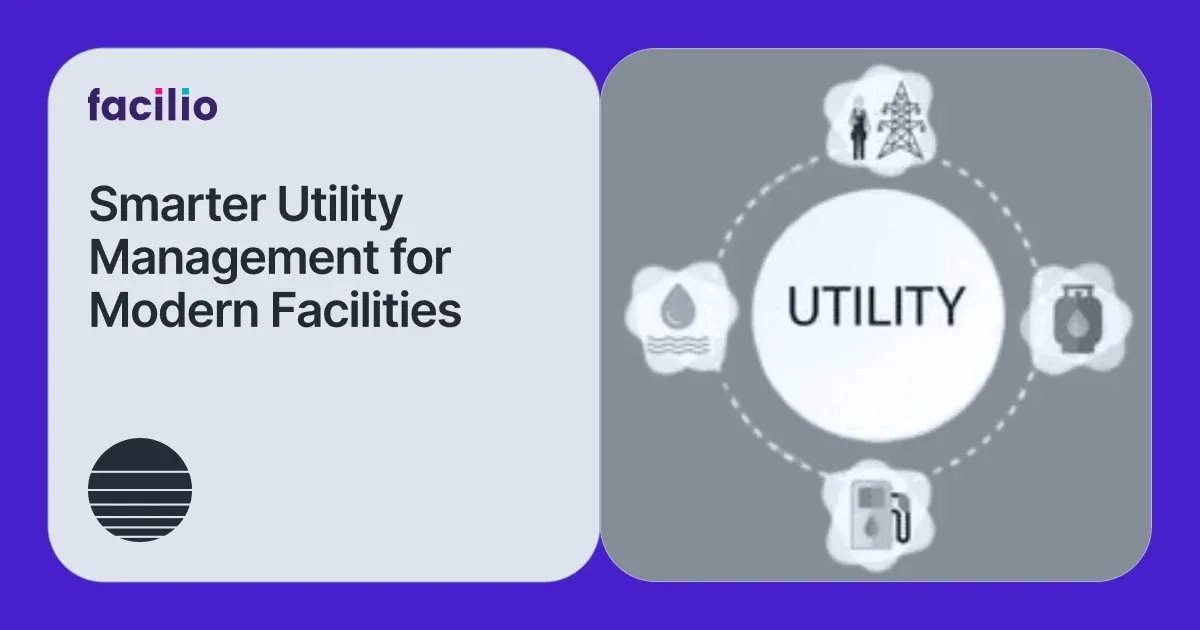

Utilities keep every building running. Electricity powers equipment and lighting. Water sustains daily operations. Gas, steam, and district cooling regulate temperatures and maintain occupant comfort. Yet despite their importance, utilities remain one of the least structured operational areas in many facility portfolios.
Bills arrive from multiple providers in different formats. Tariffs vary depending on consumption thresholds and contractual agreements. And when discrepancies appear, facility teams often have to dig through invoices, spreadsheets, and emails just to identify the source of the issue.
What should be a straightforward process—tracking and paying utility bills—quickly becomes a complex administrative challenge. As facility portfolios grow and sustainability goals tighten, organizations are realizing that utility management is no longer just an accounting task. It’s a strategic operational capability.
Why utility management has become more complicated
A decade ago, most facilities operated with relatively simple utility billing structures. Today, the landscape is very different.
Large portfolios often deal with:
- Multiple utility providers across different regions
- Complex tariff structures with time-of-use pricing
- Tiered billing rates based on consumption thresholds
- Estimated billing during meter downtime
- Scanned or PDF invoices that require manual data entry
For organizations managing dozens—or even hundreds—of sites, this complexity multiplies quickly. Each building may have separate utility accounts, unique tariff conditions, and independent billing cycles. Without a centralized system, facility teams often rely on spreadsheets or manual workflows to track these expenses. And that’s where problems start.
The operational impact of manual utility workflows
When utility data is fragmented, organizations lose the ability to see the bigger picture.
1) Utility costs become harder to control
Utility expenses are often among the largest operational costs for facilities. But when billing data is scattered across documents and spreadsheets, identifying inefficiencies becomes extremely difficult. Portfolio leaders may know costs are rising—but they can’t easily determine where or why.
2) Billing validation becomes time-consuming
Utility bills typically contain multiple elements:
- Consumption readings
- Tariff calculations
- Meter details
- Taxes and additional charges
Validating these manually is a slow process. Teams often spend hours reviewing invoices just to confirm that billing amounts are correct.
3) Disputes become difficult to resolve
Billing disputes are common in large portfolios. Incorrect tariffs, estimated readings, or calculation errors can lead to inaccurate invoices. But without proper documentation and historical records, proving these discrepancies to utility providers can take weeks. This creates delays, administrative overhead, and unnecessary financial exposure.
The missing link: Structured utility intelligence
Forward-looking organizations are beginning to rethink how utility management should work. Instead of treating invoices as static financial documents, they are digitizing utility data and connecting it with operational systems. This shift transforms utility management from manual bill processing into a structured intelligence layer for facilities.
With centralized utility management, organizations can:
- Track utility accounts across all sites
- Digitize and organize invoices automatically
- Validate tariffs and billing calculations
- Identify anomalies or discrepancies early
- Compare consumption trends across buildings
Most importantly, it enables facility leaders to understand how utilities are being used across their portfolio.
Stop Chasing Utility Bills Across Spreadsheets. Gain Full Visibility into Utility Costs Across Every Site.
Talk to ExpertsDigitizing utility bills to unlock real insight
One of the biggest barriers to effective utility management is the way billing data enters the system. Most providers still deliver invoices as PDFs or scanned documents. Before any analysis can happen, someone must manually extract key details such as:
- Billing periods
- Consumption values
- Tariff structures
- Final charges
This process is repetitive, time-consuming, and prone to errors. Digitizing utility invoices transforms these static documents into structured data that can be analyzed and tracked. Technologies like optical character recognition (OCR) allow organizations to extract billing information automatically and convert it into usable data. Once invoices are digitized, facility teams can instantly:
- Compare consumption across billing periods
- Validate charges against tariffs
- Identify unusual spikes in utility costs
- Track expenses across multiple sites
Instead of spending hours entering data, teams can focus on understanding what the data reveals.
Understanding tariffs before they affect your costs
Utility tariffs are rarely straightforward. Electricity providers often apply layered pricing models based on:
- Time-of-day usage
- Peak demand windows
- Seasonal variations
- Contracted load capacity
Water, gas, and district cooling providers may also apply tiered pricing depending on consumption levels. Without clear visibility into how tariffs are structured and applied, organizations may struggle to validate billing accuracy. Tariff management becomes critical in ensuring that invoices align with contractual agreements. A structured approach allows facility teams to monitor tariff applications and confirm that billing calculations match agreed pricing models. This transparency helps prevent unexpected cost escalations and ensures organizations only pay what they should.
Detecting discrepancies before they become costly
Billing discrepancies often go unnoticed until they accumulate into significant expenses.
Common issues include:
- Estimated meter readings during outages
- Incorrect tariff applications
- Miscalculated consumption values
- Duplicate charges
Without centralized oversight, these issues can slip through unnoticed. By consolidating billing data and consumption records in one system, organizations can detect irregularities early. When discrepancies appear, teams have immediate access to the data needed to investigate and resolve the issue. Instead of scrambling to gather documents, they can quickly compare billing records with historical consumption patterns. This speeds up dispute resolution and protects organizations from unnecessary overpayments.
How different facility leaders benefit from utility intelligence
Utility management affects multiple stakeholders across an organization. Each role relies on accurate billing and consumption data to make informed decisions.
A) For portfolio managers: Visibility across properties
Portfolio managers oversee multiple facilities and need a clear understanding of how utilities impact operational costs.
Centralized utility management allows them to:
- Compare consumption trends across sites
- Identify buildings with abnormal utility usage
- Support sustainability initiatives
- Plan energy optimization projects
With reliable data, portfolio leaders can make smarter decisions about where to invest in efficiency improvements.
B) For finance teams: Accurate billing and forecasting
Finance teams depend on precise utility data for budgeting and reconciliation.
Structured utility management helps them:
- Validate invoices quickly
- Track expenses across sites
- Improve cost forecasting
- Reduce administrative workload
This strengthens financial control while improving reporting accuracy.
C) For operations leaders: Faster detection of inefficiencies
Operations teams benefit from better visibility into how utilities are consumed across assets and buildings.
With centralized utility data, they can:
- Detect abnormal consumption patterns
- Investigate equipment inefficiencies
- Track the impact of energy-saving initiatives
Utility management becomes a powerful operational insight tool—not just a billing function.
From reactive billing to proactive utility optimization
Organizations that modernize utility management unlock far more than administrative efficiency. They gain the ability to use utility data strategically.
Instead of simply processing invoices, they can:
- Monitor consumption trends across portfolios
- Validate billing accuracy automatically
- Identify opportunities for cost reduction
- Support sustainability and ESG reporting
This shift moves utility management from reactive expense tracking to proactive operational optimization.
How Facilio helps modernize utility management
Utilities represent one of the largest and most complex operational expenses for facilities. But managing them through spreadsheets and manual workflows makes it difficult to control costs or identify inefficiencies. Organizations need a smarter way to track utility accounts, digitize invoices, validate tariffs, and resolve billing discrepancies across their portfolio. By bringing structure and visibility to utility management, facility teams gain the clarity needed to reduce costs, improve operational transparency, and make more informed decisions. Facilio enables facilities teams to centralize and digitize their entire utility management workflow. Utility accounts, invoices, tariffs, and billing records are consolidated into a single platform, allowing organizations to track consumption, validate charges, and detect discrepancies across sites.
With automated bill digitization, tariff validation, and structured dispute management, teams can eliminate manual workflows and gain real visibility into utility performance. Instead of reacting to invoices after they arrive, facility leaders can proactively manage utilities across their portfolio with Facilio.

Take Control of Utility Costs Across Every Building with Facilio.
Schedule a Live DemoAbout the Author

More from Facilio